Western Australia’s climate is well known for its long, hot summers, intense UV exposure, and drying winds — particularly across Perth, Rockingham, and surrounding coastal regions. Because of this, choosing the right heat-reducing fabrics for outdoor blinds is not just a design decision; rather, it’s a practical investment in comfort, energy efficiency, and long-term durability.
Fortunately, modern outdoor blind fabrics are engineered specifically to perform in harsh WA conditions. Therefore, by selecting the right material, homeowners can significantly reduce heat buildup, improve airflow, and enjoy outdoor spaces year-round. In this guide, we’ll explore the best outdoor blind fabrics for WA homes, explaining exactly how each option performs under extreme summer conditions.
Why Fabric Choice Matters in WA’s Extreme Climate
In Western Australia, outdoor blind fabrics must endure more than just occasional heat. Instead, they face constant UV radiation, salt-laden coastal air, strong winds, and fluctuating temperatures. Consequently, lower-quality fabrics often fade, warp, or trap heat.
However, when you choose fabrics specifically designed for heat reduction and UV protection, you gain several important benefits. For example:
- Reduced ambient temperatures in alfresco areas
- Improved airflow and ventilation
- Less glare during peak daylight hours
- Extended lifespan of blinds and surrounding structures
- Increased comfort for summer entertaining
With these advantages in mind, let’s now take a closer look at the top-performing fabric options for WA homes.
1. High-Density Mesh Fabrics – The WA Summer Essential
To begin with, high-density mesh fabrics remain one of the most popular and effective solutions for heat reduction in Perth and throughout WA.
Why Mesh Fabrics Perform So Well
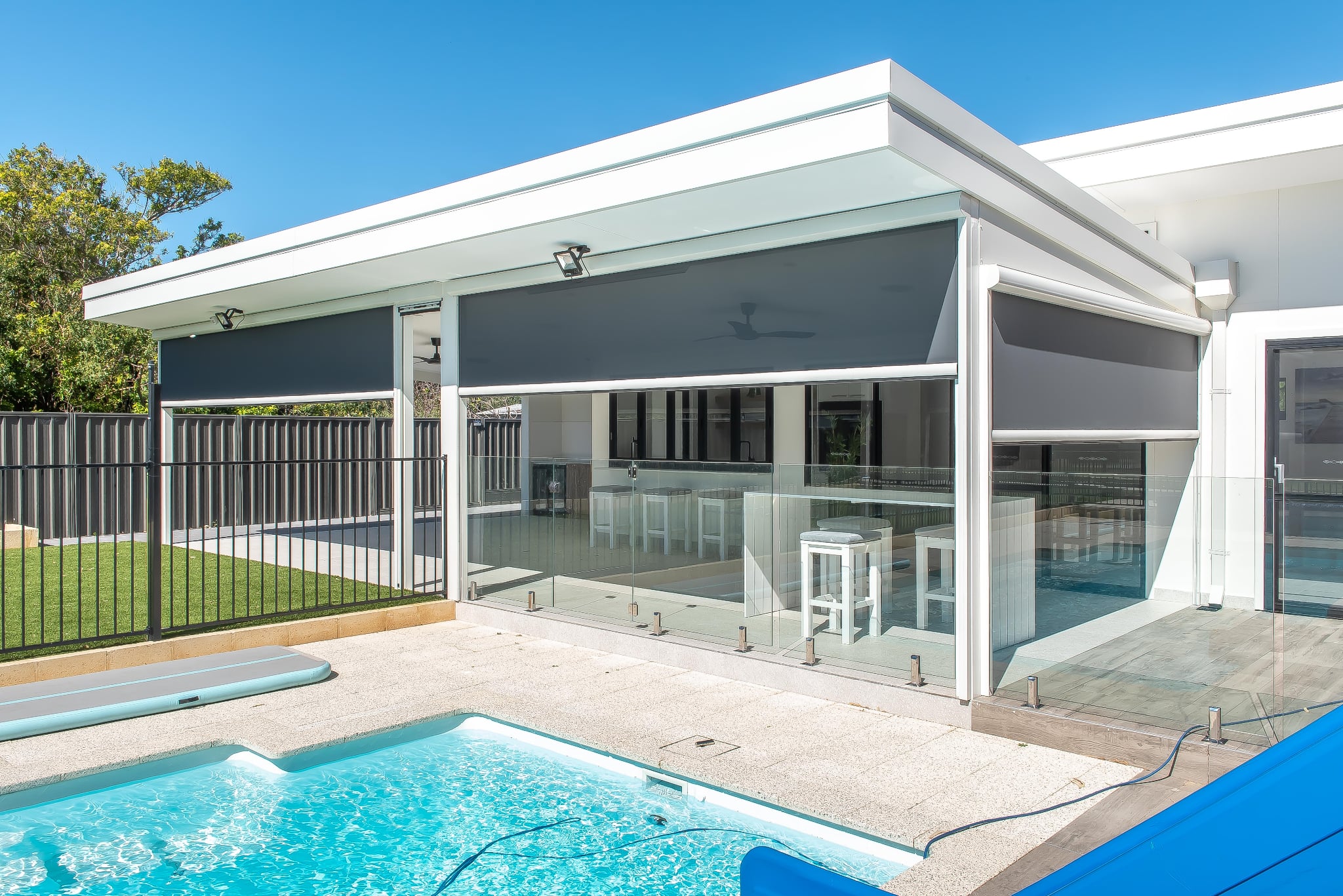
Mesh fabrics block a high percentage of solar heat while still allowing air to flow freely. As a result, they reduce radiant heat without creating a sealed, stuffy environment. Moreover, this airflow helps harness cooling sea breezes — particularly important in coastal suburbs.
Key Advantages
- Excellent heat and glare reduction
- Maintains airflow and ventilation
- Preserves outward visibility
- Performs well in both coastal and inland conditions
Because of this balance between shade and breathability, mesh blinds are ideal for alfresco areas used throughout the day.
2. PVC Outdoor Blind Fabrics – Strong Protection from the Elements
On the other hand, PVC outdoor blinds offer a more enclosed solution, making them especially useful in areas exposed to wind, dust, or rain.
How PVC Helps Manage Heat
Rather than relying on airflow, PVC blocks hot winds and reflects direct sunlight. Additionally, tinted PVC options soften harsh glare while maintaining visibility.
Where PVC Works Best
- Wind-exposed patios and verandahs
- Coastal homes affected by salt air
- Outdoor areas requiring weatherproof enclosure
That said, because PVC restricts airflow, it works best when paired with ceiling fans or ventilation systems. In combination, these features create a comfortable and controlled environment.
3. Acrylic Outdoor Blind Fabrics – Comfort Meets Style
Meanwhile, acrylic fabrics provide an excellent middle ground between performance and aesthetics.
Why Acrylic Fabrics Are Effective
Acrylic fibres naturally resist fading, mould, and UV degradation. Furthermore, they filter sunlight evenly, which helps reduce heat without darkening the space too much.
Benefits Include
- Soft, premium fabric appearance
- Strong UV resistance
- Long-term colour retention
- Consistent heat and glare control
As a result, acrylic fabrics are ideal for homeowners who value both comfort and visual appeal.
4. Sunscreen Fabrics – Maximum UV and Heat Control
In addition to mesh and acrylic options, sunscreen fabrics offer some of the highest levels of solar protection available.
Performance Highlights
- Blocks up to 95% of UV rays
- Significantly reduces solar heat gain
- Maintains outward visibility
- Performs reliably under intense sun exposure
Because sunscreen fabrics are technically engineered, they are often chosen for high-exposure alfresco zones and premium residential installations.
5. Light-Coloured & Reflective Fabrics – An Often Overlooked Advantage
Interestingly, fabric colour plays a major role in heat performance — yet it’s frequently overlooked.
Why Colour Matters
Lighter and reflective fabrics absorb less heat than darker materials. Consequently, they remain cooler to the touch and help lower surrounding air temperatures.
Ideal Applications
- North- and west-facing alfresco areas
- Homes exposed to strong afternoon sun
- Summer-focused entertaining spaces
When combined with mesh or sunscreen fabrics, lighter colours can dramatically enhance heat reduction.
How to Choose the Right Fabric for Your WA Home
Ultimately, selecting the best outdoor blind fabric depends on several important factors. For instance, you should consider:
- Direction of sun exposure
- Wind patterns and coastal influence
- Desired airflow and ventilation
- Privacy and visibility requirements
- How often you entertain outdoors
Final Thoughts: Beat the Heat with the Right Fabric Choice
In conclusion, when it comes to managing WA’s summer heat, fabric choice plays a crucial role. High-density mesh, advanced sunscreen materials, UV-resistant acrylics, and reflective colours all offer proven heat-reducing benefits when used correctly.
By selecting the right outdoor blind fabric — and ensuring professional installation — you can transform your alfresco or patio into a comfortable, usable space throughout the hottest months of the year.
Need Expert Advice on Outdoor Blind Fabrics?
Shutter Co WA specialises in custom outdoor blinds designed specifically for WA conditions.
Book a free measure and quote today to discover the best heat-reducing fabric for your home.